
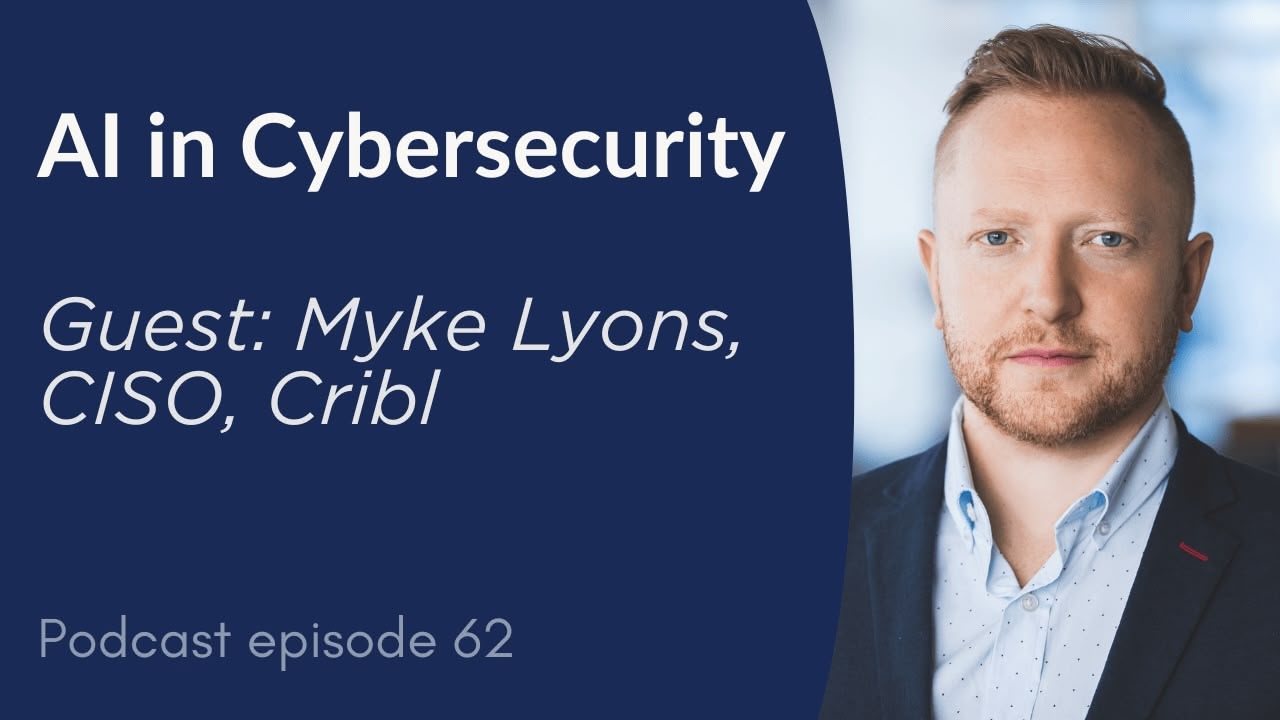
Join Security Cocktail Hour hosts Joe Patti and Adam Roth for an in-depth conversation with Myke Lyons, Chief Information Security Officer at Cribl, about AI in cybersecurity operations. Discover how modern CISOs are actually using LLMs and AI tools in their daily work, handling the data explosion (28% CAGR growth in logs), and transforming security operations with smarter telemetry management. Myke shares practical AI adoption strategies, prompt engineering techniques, and his unique perspective on threat hunting with modern data architectures. From his non-traditional background (Culinary Institute of America graduate) to leading security at companies like Snyk, Collibra, and ServiceNow, Myke offers real-world insights on the future of AI in security.
Episode Timestamps
- 00:00 Intro
- 00:38 Welcome Myke Lyons
- 02:42 The Evolution of Logging and Telemetry
- 06:21 Data Ownership and Access
- 10:37 The Importance of Schema in Data Management
- 14:36 The Future of Data Queries and AI
- 21:30 Privacy Concerns in the Digital Age
- 29:09 The Evolving Landscape of Security and Data Privacy
- 31:43 Navigating Security Questionnaires and AI Integration
- 34:12 Leveraging AI for Enhanced Security Practices
- 37:29 The Role of AI in Data Management and Analysis
- 42:37 Future of AI in the Workplace and Its Implications
- 54:21 Final Thoughts on AI’s Impact and Future Directions
Topics Discussed
- AI
- LLM
- Cybersecurity
- CISO
- Data Security
- Telemetry Management
- Threat Hunting
- Prompt Engineering
- Security Operations
- Log Management
- GenAI
- Machine Learning
- Security Leadership
- Cribl
Full Episode Transcript
Joe Patti (0:05) to the Security Cocktail Hour. I’m Joe Paddy.
Adam Roth (0:08) I’m Adam Roth.
Joe Patti (0:10) Adam, we’re going to have fun today because we’re talking about AI again. And the last time, last episode, we talked to a consultant who works with a lot of customers, sees the whole view of AI. Today, we’re talking to a CISO, a Chief Information Security Officer, who’s going to tell us about what he’s doing. Someone who actually does something, who actually secures stuff. So we’re going to hear what he’s up to. And today we are lucky to have Mike Lyons from Cribble. Mike, welcome to the show.
Myke Lyons (0:44) How you doing guys?
Adam Roth (0:46) I’m doing well.
Joe Patti (0:48) doing great. It’s nice day here. and we’re going to talk about AI. See, I to keep saying AI over and over again so these algorithms pick it up.
Myke Lyons (0:57) You gotta say Gen AI, LLM.
Joe Patti (0:59) That’s right, Gen.i, LLM, what else can we do? We should just have a list and go through it. That’s right, MCP is new, that’s the hot thing. Those are the scary ones too.
Myke Lyons (1:02) MCP, everybody’s talking about MCP.
Adam Roth (1:08) Or as our previous guest said, digital twin.
Myke Lyons (1:08) the question. ⁓ deep fake. Can we do that? Is that cool?
Joe Patti (1:12) Sorry, digital twins.
Adam Roth (1:16) Well, I might not even really be here. This might be my digital twin, but I don’t want to talk about it.
Joe Patti (1:16) yeah.
Myke Lyons (1:20) I am my own digital twin. I am my own best friend.
Adam Roth (1:24) That was Spate, that was uhhh… What’s his name? Yeah, yeah, that was in uhhh… What’s it called again?
Myke Lyons (1:26) Yep, you’re right. It was baseball. was Spaceballs and John Candy. He was a mog.
Adam Roth (1:31) Spaceballs, yeah. can’t eat, yeah.
Joe Patti (1:35) candy.
Adam Roth (1:35) He’s a mug. I’m a man, I’m a dog. I’m my own best friend. Yeah, it’s good.
Myke Lyons (1:37) Yeah. ⁓
Joe Patti (1:40) So Mike, I can’t quite figure out what company you’re at, given your dress there.
Myke Lyons (1:46) Yes, I am at a company called Cribble. We don’t have an A, but we have an I in our name. So we’re working our way towards it. I got my start a long time ago in the logging space and log management, which I guess it was before SIM was a SIM. It was kind SIM and SEM. So you can probably date when I got started there. And so Cribble is a…
Joe Patti (2:08) Right, right.
Myke Lyons (2:14) telemetry company ⁓ and we are the data engine for IT and security, which effectively means we move your logs, your metrics, your traces from point A to point B and the way that you intend to move them as opposed to just firehosing them into one or hopefully one destination and then trying to figure out what schema matches your thing. So I feel like I’m giving back a little bit to the security community and helping ⁓ uplift us. ⁓ in the telemetry world, when I got my start in security in logging, the goal was to get all the logs. Now all the logs are way too many logs. ⁓ So now it’s more about, it’s too much. The stat I’ve been hearing is 28 % CAGR ⁓ for logs, which is not how my budget grows. And my CEO says he talks to people all the time and says, know, budgets are not aligned.
Joe Patti (2:53) It’s too expensive.
Myke Lyons (3:10) or growing at the same rate that the logs are growing. it’s a good way to put it in the place so you can make more sense out of it. Usually it’s sending it to a SIM of some sort as well as other destinations.
Joe Patti (3:24) so you’re in the logging space. So it’s not exactly a security company, but it’s used by lot of security groups basically to handle their SIMs and their logs and everything, but not just that, right? Third L.
Adam Roth (3:40) I was gonna say I’m sorry to interrupt but this is what we said about sims. Sims were not security tools at one point supposedly They were tools for statistics and whatever else and then they became a security tool I’m not gonna say the two other brands because obviously you’re on here But you know some of those didn’t originate as sims they originated as other Software and then we would talk about like original log and we talk about syslog Syslog is no longer syslog. Syslog is whatever
Myke Lyons (4:09) Cislug’s a great one. ⁓ It’s one of those scenarios where we send something that we were required to keep for various durations and operate our business. ⁓ But we would send it over UDP, which is not exactly a purifier way to get something to its destination you need it to be. ⁓ The other side, it’s funny, for a number of years, and I’ve said this to people I’ve had the chance to work with over the years in security and people on my team, or I was on their team.
Adam Roth (4:22) Yeah
Myke Lyons (4:37) You know, Sims and security logging was really about auditing to many extents. And I think it became an operational tool, reactive tool. ⁓ and it became really fast. The, the indexing services that they built were great. And then we took it and we kind of ran with it a little bit. And we attached sore to it. Obviously a lot of the big, the big brands out there bought into, bought, bought companies that were sores. Now we’re looking at AI sock. Then we were leveraging things like. MSSP’s and we are leveraging MSSP’s. The thing that I would say, so no, not purely a security company, but definitely security SRE teams, IT teams, people that run apps. They’re the ones who, you know, consume our service the most or consume our, deploy our product the most. But what I am seeing, and I’m obviously a customer being the CISO, I’m the operator here, you know, of a great team of people. We use it for a lot of threat hunting. And a lot of our customers use the telemetry that we gather for threat hunting. Cause we can keep it in a much cheaper location. Your storage you bring, if you have S3 buckets or whatever, we could search across all of those things in a much less expensive storage vehicle than your SIM, which is for your high value, high fidelity information, but it has a high cost attached to it. So I think if you think about the pyramid, the tip of the pyramid, the high value stuff goes on top. that middle tier is that like, let me go back, grab context. Let me go back and look for TTP or IOC searches back in days, six months, 12 months, whatever the case may be. And then I have my, gotta keep it because otherwise I get in trouble tier. And then I have my dev null tier.
Joe Patti (6:21) Yeah, but you know, it’s ⁓ it’s sort of a security company and you’re the see-saw. mean, and you have this product, you must have ⁓ absolutely unlimited access, unlimited scalability, right?
Myke Lyons (6:35) Well, I’m still responsible for a budget at the end of the day.
Adam Roth (6:40) I’d be willing to bet you they probably manage him like a custom will manage a Sam or Cribble where they say look look our bill increased by $6,000 a month shed some logs we don’t need the logs of Somebody ordering the menu when it going through the HTTP in a web server So I’m sure he’s getting managed as well lower the budget even though we’re the client and the the cost and the vendor You got to lower it
Myke Lyons (7:07) It is, ⁓ so it’s usually my finance team who reaches out to me and says, hey, you’re running a little hot this month. we realized that somebody was probably building something out or testing something in CloudTrail is chatty, right? CloudTrail logs went through the roof because they can be chatty. They’re also really useful, but only for a short duration of time. this is kind of how we’re.
Adam Roth (7:13) Yeah.
Myke Lyons (7:32) We’re getting the benefit of it. And also at the same time, learning and experiencing what I think a lot of the other players out there are experiencing. The other side of it is I’m a firm, really like some of the things that we stand for here. Many of the things that we stand for here. One of them is it’s your data. So my data that’s routed around by Cribble is goes into my, my, my storage vehicle, my blob storage vehicle, our customers, they want to route it to their. places, like it’s still their data. We’re very hands off. So from a what’s going on in the macro industry about like limiting your access or being able to use topical for us today, AI against your data. It’s your data, right? That’s I’m, I’m a big fan of that, a big advocate for that. And I’m hearing not all of the cyber world is, is aligned to that. They’re either training on your data. They’re opting you into training. We’re going through some of those scenarios with some of the larger AI players where now you have to go and click a bunch of buttons and opt out from them training on your information, or they’re rate limiting your access to your data. Some of the ticketing vendors are doing that. And it’s like, whoa, this is my ticket information. I should be able to get it.
Adam Roth (8:47) been a while since I’ve really dealt with Sims, but I remember at one point you had access to your data, but you didn’t have access to export your data as ⁓ a whole if you were moving to another organization. like, nope, you want your whole data in one big piece? You have to pay money. Sound familiar, Joe? Yeah.
Joe Patti (9:06) Well, it’s huge too. Well, I mean, we’ve encountered that, but you’ve got to do two things. You need to make sure that in your contract, when you do a termination on it, whether it’s you just decide to go somewhere else, so there’s an issue that you can get your data, but you also got to figure out, you get the data? I mean, if you’re talking.
Adam Roth (9:24) It’s not on the USB, it’s H.O.A. ⁓
Joe Patti (9:25) Many ter… Yeah, you know, I mean, I’ve done this and I mean, it took weeks, if not months to get all the data. And you gotta have someone to send it to.
Myke Lyons (9:34) And what’s the schema? Is it usable? Because is it something that’s just so specific to that particular ⁓ vendors? proprietary, there we go. I haven’t even had a cocktail yet. Proprietary schema, although full disclosure, I did get one. ⁓
Adam Roth (9:43) Preparatory, yeah. You
Joe Patti (9:53) Ah, you just let an AI chew on it. How many resources can that take?
Myke Lyons (9:56) There you go. There we go. So yeah, for me, think there’s some schemas are really useful. OCSF is a great open schema. It’s not as broad as I think we would like it yet. I think it’s growing and maturing. And OCFF is available to anybody to use. But there’s reasons why you also may want to keep raw. And so I’m… ⁓ You know lucky in that regard where I can keep some stuff in OCSF. I can also keep it in raw. I can modify the schema as I go. I can store it in raw and view it in OCSF or I could pipe it out in OCSF. So there’s there’s some cool stuff going on and unlocking you know that’s going on with with data.
Joe Patti (10:37) I’ll tell you, I like having access to the world and I’ll tell you why. You probably don’t need it, but if you have a big sim and you have a lot of data and you’re spending like this ungodly amount of money for it, I’d hate to be in this situation where I need to explain to like, know, the CEO or the COO or something. like… Yeah, well, we had this data, but we ordered it, then we paid all this money, but we ordered it down to save a little bit of money, and now we don’t have it, and we can’t do it. That’s… that kind of thing makes me nervous. I don’t know how realistic that is, but that always worried me.
Adam Roth (11:12) But yeah, but then you find out if it’s not in the raw data the raw format and then you have it in a proprietary format you might not have realized and again I’m not an expert on sims or any type of logging but you find that when you went to that proprietary format or any format that you lost a field that you didn’t realize should have been there
Myke Lyons (11:34) It’s, you know, it’s, my kids are not quite old enough to be able to go to the grocery store, you know, on their own fruition and get stuff. But it’s like, you sort of send your kid out with a shopping list of things and in your mind, they’re gonna make you like a cheeseburger, right? Apparently today is National Cheeseburger Day, which is so, there you go. Dinner plans now, gotcha, sorted. So like you send them out and you’re like, hey, just get the ingredients for the cheeseburger and they come home with a salad.
Adam Roth (11:52) ⁓
Joe Patti (11:53) Really?
Myke Lyons (12:00) Like how disappointing would that be, right? You gotta come and be like, hey, here’s a salad. I know you wanted a cheeseburger, but here’s a salad. It’s kind of the same thing with schema, right? You grab all those things, you change them, you mix them around, and then you don’t necessarily end up with what you originally wanted.
Adam Roth (12:14) gonna have to correct you though. think the answer might have been you got a cheeseburger salad and you got all confused. So the format was a little bit changed and then you end up getting a cheeseburger salad but you wanted an actual cheeseburger. ⁓
Myke Lyons (12:15) Okay. That’s fair, that’s fair, but I feel like the cheeseburger should just be that big old hunk of…
Joe Patti (12:31) I’m lost.
Adam Roth (12:33) I was just being funny. John means a they meaning that we don’t have the right format and then you’re using the same ⁓ Attributes, but they get mixed around a little bit And so instead of you actually getting you got the lettuce you got this you get the pickle But you know, but you were gonna salad but you actually wanted a cheeseburger and you didn’t get all the ingredients You missed the meat. I don’t know that that’s how I saw it
Joe Patti (12:56) I know. Well, I don’t have deep expertise in this, but I’ve worked with it enough to know the pain of dealing with the formats, dealing with the huge amounts of data and stuff. Although, you know, it’s funny, ⁓ whenever I’d like, you have something outsourced or whatever, you know, say the vendor is like, the queries are going slow or something. I’m like, listen, I’m paying you good money. Just throw more CPUs at it. I guess you can’t do that with yours.
Myke Lyons (13:23) Well, we could throw more Amazons at them, I guess would be the way I would phrase it. There is a lot of, it’s also, I think one of the important things, this is something that I experienced running investigations sort of continuously. If I’m running an investigation, the SIM is the place I want to start my investigation, because it’s going to be timely index information. But as I’m running that investigation, I might want to say, ⁓ Might have an indicator here. It might be something that’s interesting to me, an IP address, a domain or whatever. I also want to be able to run across a much larger set of data, that investigation in parallel to my sort of live fire defense mode, right? And so this is like, if I was to run that both in the SIM, I’m going to bog the SIM down because to your points, CPU may be impacted while I’m running one query. by having the ability to run it across, you know, multiple data lakes, if you will. ⁓ or a data lake in a sim. I’m also expanding that. I can also let my team have more information and they can run these things in parallel so we can run more historical lookups as well at the same time of running just what is currently going on.
Adam Roth (14:36) You know what I find interesting like when I was working with Sims You know we would you know do the use case for the same and then get the fields and then run the queries and create use cases but Then that vendor whether it was a networking vendor whether it was even Microsoft or whatever They changed their format of their logging and then I’m like, ⁓ my god what broke and then we had a rewrite and do all the
Joe Patti (15:01) you
Adam Roth (15:05) the fields and attributes and find out the spacing it was I’m kind of glad I don’t do sims anymore, but you know, then again, I Don’t do much anymore. So all good
Myke Lyons (15:16) Normalization is a very ⁓ challenging thing. I’m a big advocate for detections as code. think it’s a, ⁓ like to buy software from vendors that offer me a detections as code scenario. But again, that normalization is critical, right? You have somebody calls it IP, somebody calls it IP underscore address, somebody calls it IP underscore adder, and being able to normalize that across the board is challenging or has historically been challenging. Now, being closer to that, ⁓ I myself, I get the luxury of like sort of just generally using natural language to ⁓ interrogate the data. I’d like to honestly be able to yell at it at some point, right? Like, you know, right? As a professional, you know, security professional for many years, the two of you, you know what you want and why should I have to learn some oddball query language or have to be able to write SQL or KQL or like all that stuff.
Joe Patti (15:58) Well.
Myke Lyons (16:13) when I just know what I want, like give me my destination. Also, I think the junior people that are coming up, like the newer folks, they’re gonna have a completely different point of view or perspective about how to get to the destination. And so I’d hate for them to learn some, know, Pascal, right, or something or Cobalt. I’m like, exactly, like, why the hell are they gonna have to learn that? Well, they should just be able to come in and be able to have that conversation with the data.
Adam Roth (16:31) Haskell, like, 4-train 77, yeah, yeah.
Joe Patti (16:34) Yeah. Yeah, but here’s the thing, and this is what I worry about so much, know, getting into the natural language and the LLMs and everything is all right. So, you you got your analysts, you got your junior guys, and it used to be, you know, the ones who were really good, they could write a great query, they do all these funky syntaxes and all this stuff that you I forgot about that stuff years ago. ⁓ But now you don’t need it. But one of the things that they got from doing that was they really understood what the data is and what’s going on and what questions to ask. So I mean, how are you dealing with those people now in terms of training them? then you give them a thing and just say, yell at the thing, ask a question. they’re like, someone’s first week or something is like, what happened. mean, like, ⁓ how are they learning, you know?
Myke Lyons (17:35) I’ve, this phrase has been quoted internally in something I use sort of jokingly, but I just sprinkle a little AI on top and then they’re able to get whatever the hell it is that they want.
Joe Patti (17:44) Yeah.
Adam Roth (17:45) So are you telling me that we’re not going to be able to use, I don’t want to say it out loud because it’ll trigger my background, but G-O-O-G, yeah. Hey, blah, blah. Find the destination IP of 192.168.1.0.24 in all of my data lakes and let me know if there’s source or attribution, blah, blah, to whichever log. Is that what we’re going to be doing one day?
Myke Lyons (17:52) yeah. I can envision it’s going to be a combination therein. The thing that you’ve just said, imagine chaining like six or seven things together, right? So it’s find me every instance of that address you just mentioned or that range you just mentioned. And also once you turn up the results, enter them into the ticket as an additional file that I can then use to write a Python script to… move to the next system or to the next location or to run a defense or update my detection. I see that stuff coming.
Adam Roth (18:42) Sounds like a virtual, yeah, it sounds like a virtual assistant, SOAR, or AI, SIM, know, type of thing.
Myke Lyons (18:47) Mm-hmm. It’s ⁓ or or copilot. God, the overwork. ⁓ It’s ⁓ I don’t. It’s funny you say that you know the G word there, the Google. I don’t use it anymore. ⁓ Like I I actually have stopped and I was a huge advocate, right? As we used to say, like my Google Fu is strong right now. I use a different.
Adam Roth (18:53) I didn’t want to say that. ⁓ I purposely didn’t say that.
Myke Lyons (19:15) ⁓ I use perplexity because that’s the tool that I like right now. I’ve used, you know, chat, GPT extensively. I’ve kind of written the idea of of a search and internet search sort of out of my, you know, general, general day to day, but I probably use perplexity 50, 60, 70 times a day, just like I Google.
Adam Roth (19:32) We…
Joe Patti (19:33) You know,
Adam Roth (19:33) Yeah.
Joe Patti (19:34) yeah, but it’s interesting. mean, you know, I’ve done the same thing. I’ve tried to be cool and like, my God, you do this. It’s so, it’s so fun and you can find all this. But, you know, I found out that I’ve been going back to using the standard search engine for some things and I don’t use Google, but because I’m paranoid, but, you know, sometimes I just, you know, I just want to know like, you know, oil filter for this model car. know, just find that for me. I don’t need a tremendous amount of thought and a dissertation on this stuff, know, depending on what it is.
Adam Roth (20:07) I don’t know. look, I we actually had this conversation last podcast, which is coming out now. And we spoke about the issue with search engines and we spoke about A.I. and we spoke about the security issues behind that. But meanwhile, every single one of us is carrying a phone and every one of our phones, unless you’re using a flip phone or one of those like special like you can buy online for a thousand five hundred dollars NSA phones. That doesn’t have a built-in assistant that doesn’t do this. It doesn’t do that. The Bluetooth gets turned off if you’re in a Faraday cage. still have everything in our lives is being heard, listened, recorded. And I don’t think a lot of people realize that like we’re recording for quality assurance from your Google or from your Apple, whatever it is. We have no choice almost anymore unless if you don’t modernization, you really don’t have anything.
Myke Lyons (21:03) It’s a fair statement. doesn’t, no. Just because you’re paranoid doesn’t mean they aren’t watching. ⁓
Joe Patti (21:04) I’m depressed.
Adam Roth (21:10) Or listening
Joe Patti (21:11) We know they’re watching. They are watching. They’re watching everything. Please.
Adam Roth (21:14) Wait, wait, Mike. We had a woman on an attorney that ⁓ wrote, I think, a book on this. And she’s like, ⁓ you got to be careful of all this. And then she said, I can’t live without it. I still use it, though. And she wrote a book on how the data is being collected. Remember that joke?
Joe Patti (21:30) Yeah, yeah, yeah.
Myke Lyons (21:33) ⁓ There’s ⁓ a former CISO from Robin Hood, Kaleb Seema, a really interesting, so when he sort of retired from Robin Hood, and his wife is actually sort of a TV chef, a TV personality, and her family has come up in San Francisco owning many restaurants and being a cool place to go. At any rate, he wrote a really interesting LinkedIn post that’s available, ⁓ and it’s on how private you can become. if you really just focus on it. And he started off with like, here’s how I can buy a car under an alias. And I don’t have to, cause that’s they sell your, like every acquisition of everything you make, you have to give up information. And then they in turn sell that information to some sort of data broker and they sell it and groom it and modify it and change it and reformat it. And he went into these really interesting details. I thought it was cool. And then sort of as you know, the summary is How much of an inconvenience is this? And he said, monumental.
Adam Roth (22:34) But yeah, sorry.
Joe Patti (22:34) Well, I’ll tell you, I have an old car. sometimes I say, you know what? I’m going off the grid. This car it has, it’s from the 80s. It has no electronics. You know what it’s like, no nothing. And I’ll go out and I’ll say, you know what? Sometimes I’m leaving the phone at home. I just want to be. off the grid or whatever for a little bit. Except then I realize the damn thing is so likely to break down. Being in it without my cell phone is a very bad idea.
Adam Roth (23:04) The board is not telling you Mike is that it doesn’t run on gas and it doesn’t run on electric It has the hole in the bottom and you have to use your feet like the Flintstones But look look you go you go you go to CVS you go to any of your pharmacies that date is there and that data is is mine because part of what you’re doing is unless you opt out a lot of that data is sent
Myke Lyons (23:14) That’s total news.
Joe Patti (23:14) It’s not that old.
Adam Roth (23:31) Your doctors are sharing the data with other doctors. You know, you have to give permission to a certain extent if you’re sharing among different medical places. You have a laptop. A laptop is either Windows or Mac or Linux. And even Linux these days has a certain level of acquisition of data. Your camera on your computer, the camera on your phone has microphones. Your TV hanging on the wall. I can go down a laundry list of everything that you’re doing that’s listening and hearing and transcribing it’s almost impossible to do anything these days unless you want to get a flip phone and Even then, you know, you never know if somebody’s gonna you know Have some kind of device or ability to read it. It’s all good though
Joe Patti (24:16) Well, I’ll tell you the other- Oh, what’s that?
Myke Lyons (24:18) You guys have these in your, this is a Faraday bag.
Adam Roth (24:20) Yeah, yeah,
Myke Lyons (24:20) It’s filled with Faraday bags of different sizes for all the different devices that I have. Cause as a security person, we’re all a little bit, you know, we all got our thing. My basement is also a Faraday cage. ⁓ I have mesh in the concrete, both above, below and on the sides. Cause maybe it’ll happen. I don’t know. We good to go down there and be able to protect myself. But yeah, so I’m nuts. Don’t get me wrong. I’m a security nut, but these things work.
Joe Patti (24:26) I gotta get one of those.
Adam Roth (24:30) Faraday Bag Show.
Joe Patti (24:41) cool. Hey, listen, ⁓ I’m such a nut that the other day I was like, I was cleaning up my PC, looking at my Mac, looking for stuff. And I’m like, ⁓ there are some recordings here of my voice that I have in iCloud. I really don’t want Apple to be able to get into that and someone to use my voice and all. Then I said to myself, dude, you have a podcast. are like hours and hours of my voice on the internet.
Myke Lyons (25:06) What am I talking about?
Adam Roth (25:13) This over my cameras on my computer, but every single one of our phones we don’t cover the microphone We don’t I’ve written so I’ve written papers about this for for for a degree. I’m going for Everything that you have the ACLU they talk about that also about you know How it helps you and how it hurts you right? You know somebody’s getting a divorce the husband, you know turns around and subpoena is the data for their my fitness pal Why was your mind fitness pal at you know? ⁓ 160 beats per minute 3 o’clock in the morning when you weren’t with me So these things have actually really happened So your date is your data you want the convenience of losing the weight you want the date you want to count your calories You want to do this you want to do that, but everything’s out there
Myke Lyons (25:57) I think it’s also about, just like with all things security, it’s about scoping. I use the analogy of like, I got a hundred bucks to spend and how am gonna spend it? Well guess what? I’m not gonna peanut butter spread that money across all of my things that I need to be careful about. I’m gonna go through an exercise. I’m gonna evaluate what are my most important things. With me going to CVS or Walgreens, I’m gonna be really, really worried about my existence and functioning. I probably have a bad Walgreens or a bad CVS that I’m going to, right? I’m more worried about driving to the damn place and getting hit by somebody who’s texting and driving versus going in there and having them aisle by aisle scan my phone and pick up my IMEI and then share it against their database. But I am worried, very realistically worried about remote attacks, people that can send me zero click exploits to iMessage or… WhatsApp or something to that effect. That scares the crap.
Adam Roth (26:57) Am I concerned about that as much I’m more concerned about my data reside somewhere. I if I go to Have I been pwned? I think I’m at 32 different pwns because that data resides in somebody else’s cloud I don’t think anybody’s targeting, know Adam, but I do know that that data gets out there Somebody aggregates that data your text like even on 9-eleven. I mean, it was a horrible day But they somebody actually released 9-eleven texts after that because those were being you know, where somehow another were being captured so Yeah, so what I’m getting at is I’m not worried about Somebody targeting at him. I’m worried about the drive-by the person who says like you look all those people that were doing those things with Ashley Madison, know, they use fake email addresses or they use this or that but eventually a lot of that data had attribution and then some people took advantage of those data by writing API’s
Joe Patti (27:31) Well, back then it was easy.
Adam Roth (27:56) Supposedly Facebook no longer has you I know nothing about Facebook anymore, but they ran it and they said oh if you don’t turn around and give me Your stuff. I’m gonna release this text all the people on your contact that I already exported so it’s more about scripting and Opportunity an opportunity to make money
Myke Lyons (28:07) I think. Well, in the context of this conversation, right? ⁓ That now is considerably easier with AI. That much easier. Because you don’t necessarily need the data set itself, but you can also just have the method built out for you, how you want to search it. Yeah, the Cambridge Analytica scenario was quite interesting. I met Chris Wiley a while ago, who was the one caught up in that business and did an interview actually with him. ⁓ It’s got to be five years ago now.
Adam Roth (28:39) It’s time to drink, sorry.
Myke Lyons (28:40) Yeah, probably five years ago I did an interview with him and it was pretty interesting to see how open and available that data was. And when they were highlighting it to Facebook, they were like, no, that’s intentional. It’s all by design. And then obviously all the other stuff came out later and they’ve written 10 documentaries about it or whatnot. ⁓ It is gonna be way more available, not just the data itself, but also just the way that you can access it. Brian Krebs is probably one of the best people at that stuff, right? He just continues to impress the hell out of me as a security person and he’s an investigative journalist, not a security guy. And he can just like, oh, I know who that is. Like I can tell by the way that he uses words, then I can tell by his proton email address plus this plus that. It’s crazy. The thing that came to me, Adam, as you were saying, like, many have I’ve had imponed, I’ve had an equal or about the same number. It’s like, do we just rotate our cell phone numbers like every couple of years? Do you rotate? I’ve had the same email address since 2000. I’ve had the same phone number since 2000. It’s like, should I change it? Like, should I just get rid of it? I mean, I don’t know. Or should I come up with another method to protect myself?
Adam Roth (29:49) Well, you know how it is. Mike, it’s all about pieces of data, right? You can change your phone number, but then you’re have to change your name because eventually there’s attribution from one to another. Again, like you’re changing, right? Okay, so maybe that’s your Google voice number, but now there’s gotta be something of real value in that data that you have. So you’re using this to piece that to piece this. I got your longitude and latitude from your plain, ⁓ What’s whatever that Pokemon, you know, so there’s always some kind of Attribution to something unless you’re unless you’re some crazy nut that has Faraday bags for everything and putting concrete around your house You’re pretty screwed
Myke Lyons (30:33) Those people are crazy. Don’t trust them. What do they know? No, it’s, it’s, it’s fun. Look on the other side of AI. We, you know, I’m lucky to have access to some of it. work for a company that’s not all that old. So we’re not stodgy. There’s no like get off my lawn crap that happens all the time. So we see something that’s interesting that can help our, you know, help me do better stuff. I’m on board. So, you know, one, one scenario. And this is maybe ⁓ an adjacency, like security questionnaires, like the thing that we all hate. I have a t-shirt that says friends don’t send friends security questionnaires. I probably should have worn that one today. ⁓ it’s such a good shirt. It’s, literally have that t-shirt. That’s a good shirt.
Adam Roth (31:09) I’m gonna send you one now.
Joe Patti (31:13) We should… we can’t copy it then. well. Okay.
Myke Lyons (31:16) I’m…
Adam Roth (31:17) It’s so so Joe it’s funny right because this this is actually a part two of the podcast we just recorded because we spoke to a person that ⁓ that works for ⁓ the security company and we were talking about AI and like what type of question is what type of framework is out there and She said well, there really isn’t because it’s so diverse and so different It’s more about your use cases. Do I turn on copilot? Do not turn on copilot. Do I allow people to use LLMs outside? Do I not let them use LLMs? Do we use internal LLMs? Do we let them only do certain things? Can they upload certain data? Can they not upload certain data? Does it have to be scrubbed? So it’s more about the interview than it is the questionnaire.
Myke Lyons (32:04) I’ve read a few though that are like, can you please tell me the background screening process you ran for your gardener? And it’s like, we don’t have an office. Like, well, we still need you to answer the question. Okay, well, the question is not applicable, but that’s not one of the dropdowns I can choose. So it’s a fun one. I empathize with some of those folks as well, because they’ve got a regulator who’s like, I will not change the way I ask you questions. I cannot think outside of the confines of a poorly written law.
Joe Patti (32:13) Yeah.
Adam Roth (32:32) Well, Joe loves questionnaires, sorry.
Joe Patti (32:33) ⁓ God, I can go on about questionnaires for a long time. But actually, that’s a really good example of something. And I got to ask you as a CISO how you handle this because ⁓ you get these questionnaires. And for those who don’t know, if you have auditors or companies that you’re a vendor of, your customers, they send you these big questionnaires to say, does your security program look like? And they ask you about all this detail. it’s a real exercise that It’s kind of an interesting psychological thing that you can have so many different versions of things that are different, but that all basically say the same thing, which is a perfect ⁓ use case for AI, for LLMs. ⁓ But you have to kind of, definition, put your most sensitive information into it in terms of all your security ⁓ stuff. And running things locally is…
Myke Lyons (33:28) So we send them a bigger questionnaire.
Adam Roth (33:30) Can’t be a questionnaire. No, I
Joe Patti (33:31) Not real, let’s, yeah.
Adam Roth (33:32) use AI to write my questionnaire for the questionnaire.
Myke Lyons (33:35) I was a big advocate for, are you familiar with the SIG? There’s a thing called, yeah, so I’m.
Joe Patti (33:40) Yeah, yeah, that’s a standardized ⁓ one that some people send out. Yeah. Yeah.
Myke Lyons (33:44) It’s like a, you know, nine domains, seven domains, nine domains, whatever it is, it’s 1600 questions. It’s massive. It’s open. It’s $5,000, right? Maybe it’s more now. Maybe it’s eight or 9,000 bucks, but like, it’s still not a significant amount of money for a company that needs to inquire or manage these processes. But unfortunately, people felt like that was their job security was to write a bunch of really shitty questions and, you know, and then from there. share them with people who really don’t want to answer them. We are using AI. It is probably the most successful deployment of AI in my team, is the automatic questionnaire answering. Today I got the highest. We got 96 % of the questions were answered with a very high fidelity answer. We obviously check them all the time. Now we moved to more of a knowledge management case. So we’re spending more time on knowledge.
Adam Roth (34:27) Wow.
Joe Patti (34:39) Okay. But I gotta ask in doing that and if you can’t answer it’s fine. ⁓ Yeah, are you doing it with a local LLM like an Olamis setup or something? Or are you just using ⁓ Copilot, GPT, Claude, whatever? Using a vendor? You do, okay.
Adam Roth (34:44) I know what the question is already. Yeah. Or an offline. Yeah.
Myke Lyons (34:56) I’m using a vendor, established vendor. We have a relationship with them and we have a contractual relationship with them. And there’s a few vendors out there. The one that we’re using, I’ve used a few times again. ⁓ Look, the amount of hours saved by those humans that are in there just plugging away, it’s a risk reward scenario. And in this instance, it’s worth it having an established solid relationship.
Joe Patti (35:17) That’s it. Yeah. Right.
Adam Roth (35:26) We had a we had a guest on here that has his own LLM that he markets so that it’s offline and competes with Microsoft ⁓ I don’t know if you remember Joe and he he so You’re over you are old you’re about like what 13 minutes older than me You probably remember a lot more than I do I forgot what I had for breakfast but
Joe Patti (35:39) What do you call me old? I remember. It’s… Jesus, God. Yeah, exactly. Now I remember that was his differentiator that you can get your own tan and get your own thing.
Adam Roth (35:55) That’s your stick. Your stick, yeah.
Myke Lyons (35:56) thought you were going to say what he had for breakfast.
Joe Patti (36:01) But you know, it is ironic too, because you know, I ask something like that, know, say like, what about this? But again, when you step back and you say, you know, you’re in security, you’re probably outsourcing so much stuff with so much sensitive data, your EDR, your SIM, if you’re using a SIM, all sorts of things, it’s like, what’s the difference anyway? You kind of get to that point too.
Adam Roth (36:24) As people as a security practitioner you’re always told like number one don’t upload your proprietary files It’s like a virus total or to a sandbox. You have to have your own proprietary sandbox You can’t do Google searches and look for things because when you do then your search history is available and somebody can turn around and Possibly query it and know what you were looking for like, you know, especially I mean, I know it’s horrible right people who commit crimes like Where do I get? tape and tie wraps and garbage bags online, you know, eventually your data is going to be searched if there’s a subpoena out there or a threat actor wants to go to the, you know, to the extent. And it’s the same thing with LLMs. It’s the same thing with almost anything these days, anything that possibly can go, that can be exfiltrated. You got to be careful.
Myke Lyons (37:15) You gotta be thoughtful about it. definitely aren’t, you know, this is a balance of like, we, you know, we’re thoughtful about the answers to, there’s definitely tons of sense of information in there because if it wasn’t sensitive, we’d probably post it on our website and say, have at it, go look, you know, go nuts, right?
Adam Roth (37:29) So here’s the ironic part about it. We can even go old school. Everybody uses their copiers in their offices and they make them photocopies, but all that data is still on that drive. Unless you tell your vendor when they take the hard drive back, I want you to either erase or destroy that drive. That drive’s going back with everything you’ve ever scanned and copied.
Myke Lyons (37:38) Mm-hmm. It is. It is true. I’m lucky in that I have one printer in the entire Cribbill estate and it resides in our San Francisco office because we only got one office where Remote First Company have been since inception. even then, I can’t imagine we’re printing much of sensitive information. We’ve even got our lawyers to start using things like computers. It’s been really cool.
Adam Roth (38:13) wow!
Joe Patti (38:14) you are like… Are you like using the Jedi mind trick to have this happen? Because I mean, especially with lawyers, they love paper. Even the ones who are young in their 20s love paper. It’s crazy. Yeah.
Myke Lyons (38:16) Live in the dream. ⁓ They love dead trees, don’t they? Love to whack them down.
Adam Roth (38:28) ⁓ Full disclosure Mike, you know I Joe and that’s where Joe and I met a law firm and I remember Joe asked me to handle something so I end up making the mistake of speaking to an attorney and It went kind of like this Is your name Adam Roth? My name is Adam Roth ⁓ Do you work in you know, the security whatever I go. Yes, I do. He what day did you know that this Apple like whoa? You’re deposing me. I work with you This is just a technical issue not like we’re not going to court and I like
Myke Lyons (39:01) Really
Joe Patti (39:02) Yeah,
Myke Lyons (39:02) you.
Joe Patti (39:02) he tells me that and I’m like, let me guess, that was a litigator, right?
Adam Roth (39:07) I’m like Joe. Don’t you ever do that to me again? I never we worked for a law firm and we never saw attorneys We never did we were in other buildings and but Joe spoke to him Yeah, and I got deposed asking a technical question on Data loss prevention why this guy’s email was being rejected when he said this proprietary information from his corporate email to his personal email Hey Shouldn’t the software already know it’s okay because it’s been normalized
Joe Patti (39:14) Well, we tried to avoid them. Yeah. Well…
Adam Roth (39:35) I’m like, that’s not how it works. And I had to spend 30 minutes explaining it to him as if I was on, I was like being questioned, like I was somebody who committed a crime.
Myke Lyons (39:47) It’s like the, I don’t know, you guys watched Suits that, yeah, so Harvey Spector, you were going in there to Harvey Spector and he was ripping you apart, it sounds like.
Adam Roth (39:51) yeah, I watched every single episode three times.
Joe Patti (39:52) I haven’t seen that,
Adam Roth (39:58) I respect it was an amateur compared to this guy
Myke Lyons (40:01) I love to quote that TV show to attorneys when I talk to them and I have a number of friends that are attorneys. work for an attorney and I love to quote that show and they’re like, that’s the most unrealistic show ever. And I’m like, no, it’s not. It is exactly how all of you operate. And I start making my case and they’re like, well, you’re all just like Mr. Robot. Like, well, that’s actually a way better accurate depiction of us.
Joe Patti (40:15) That’s right. Yeah, it’s funny when like, you you’re dealing with someone in real life and they start doing something and it’s so stereotypical. You’re saying like, gee, wasn’t this a South Park? I mean, is this like the real world, you know?
Adam Roth (40:33) Well, yeah, we’ve actually we just actually said that a couple times recently Joey you and I like that was a Seinfeld episode You know, you know like Seinfeld is so real like, you know like ⁓ and it’s based on people’s real experiences I’m not saying every TV show is based on they have a really good what they call a technical advisor like they get these cops for cop shows they get EMTs EMT shows they get lawyers for attorney shows, whatever but Seinfeld man, they pretty much covered everything
Myke Lyons (41:03) Seinfeld’s The Simpsons, ⁓ I’ve looked all this up in an LLM obviously so they could have this conversation, it was, Seinfeld, The Simpsons, South Park makes a point of it, right? They just read the news and then they just run their play and it’s headphones only, but man, I could watch that stuff all day long. is just so, it just hits the mark. So many great writers out there that just pick these things apart.
Adam Roth (41:30) So did South Park predict anything to do with AI? I don’t watch it enough.
Myke Lyons (41:37) It’s a good question. probably should, I should know the answer to that. ⁓ And ⁓ once we conclude, I’ll be hitting up perplexity and seeing what they have to say.
Joe Patti (41:45) Look, look, here’s the thing, and this is like a running thing for years. It’s like the Simpsons and South Park have predicted virtually everything because they’ve had like 600 episodes. It’s like, there’s just so much and some of it’s gotta come true, you know?
Adam Roth (41:53) predict
Myke Lyons (41:59) Eventually.
Adam Roth (42:04) Well Joe, we’re about 60 episodes. If we get 10 times, that means we can start predicting things too.
Joe Patti (42:10) That’s right.
Myke Lyons (42:11) Ooh, that’s it. Well, you could do an episode a day for the next two plus years and you’d be fine.
Joe Patti (42:17) There you go, that’s easy. Except Adam’s gotta help me editing them because he’s useless.
Adam Roth (42:20) I offer to help you. don’t want you even hitting me up the last couple days yelling me about that. the question to so here’s my other question for you. Let’s reverse the question here. Forget about AI for a second. If we do 600 episodes, is Joe and I going to increase the valuation of our our our podcast?
Myke Lyons (42:37) I mean, based on my algorithm, I’m hearing probably about 500 million valuation.
Adam Roth (42:42) wow, where did he get that number from?
Joe Patti (42:44) must have been an LLM. Okay, well talking about predictions, no predictions, but Mike, mean, actually the fact that you’re using AI so much and that you’ve really helped crack the questionnaire puzzle is great. mean, what are you looking forward to? I mean, what do you think is ⁓ the next stuff that you’re gonna find really, really useful?
Adam Roth (42:46) Yeah.
Myke Lyons (42:46) It’s. I do believe so my con my sort of conversation earlier I was saying about being able to interrogate your data, just sort of using the words that you, you know, you just want to say rather than trying to fit them into a box. A real world example there, I was at a retail company. I was like one of my early days in the job here and got to visit a customer up in mass and sitting down and there was these two young ladies sitting next to me. They were sitting next to each other, both sock operators, you know, they, so they were, you know, this one. the one woman you could just like hear the volume of her key presses was increasing. ⁓ And she’s just banging away on this thing and she’s looking at her friend and they’re going back and forth and pointing on the screen and then they’re plugging away again. And it was one of those scenarios where in the end you just saw her like she figured out whatever stupid semi-colon was in the wrong spot or whatever syntax or if you had, and she’s like throws her hands up, it works.
Adam Roth (43:58) I hate that.
Joe Patti (44:00) ⁓ man.
Myke Lyons (44:02) She’s happy and I’m sitting there going, okay, mission in life is to make that not happen for all the other folks that have come up. I think for me, the other big one is to be able to do a lot more triage, a lot more triage. There’s so many false positives out there and I have a twitch whenever a false positive comes in. My poor team has to experience that on a regular basis when we go through our feedback sessions and we’re having conversations, I see a rule. The rule is spitting out the same thing. And it was like, Hey, yesterday this happened six times and we had the same alert come in six times. And you told me they’re all false positives. I think your rule could do with some tweaking. I’m looking forward to AI being able to help bridge that gap and know why it’s false positive hitting versus, you know, missing something on the true positive side.
Joe Patti (44:43) Yeah.
Adam Roth (44:53) Isn’t that an extension of the human doing the natural language even if it’s verbal or type in that the natural language so if I said I’m doing I’m doing a natural language and I go look for the source IP address of anything that has to do with web servers and then that’s interpreted Because it’s really not specific enough. That’s really the human that has not or should the AI could be coming back
Joe Patti (45:21) Yeah.
Adam Roth (45:22) And asking, ⁓ can you answer these questions to give a more detailed search?
Joe Patti (45:27) what the human is often bringing to that in those cases are the context and the knowledge. And that’s the real challenge. think LLM has the ability, I guess, and the promise of doing that, but it still ain’t easy, I don’t think.
Myke Lyons (45:48) No, but there’s, guess the good, it’s a good call out that you say it that way. Cause the AIs have the ability to bring a different context that we as humans just can’t hold in the air. They are, there’s no, you know, they’ve got memory that’s way beyond our capacity for immediate sort of like processing. So my, bring con I bring context in some way, would say I bring skill and experience. They can add experience by them operating. But what they can do is they can munch way more data than I can in a way faster way than I could ever possibly do. And they can run it all at the same time. So like parallel processing and things like that, they could run 10,000 queries all at the same time that I couldn’t type out on my best day. could even yell at the keyboard fast enough to get the things done. But I know and hopefully can train the system and have the human in the loop. So when they give me back a bunch of crap, I can ignore that.
Adam Roth (46:37) Yeah.
Myke Lyons (46:46) when they give me a bunch of stuff that’s actually valuable, I can also give positive feedback so that I can continue to iterate on it. So I think me and the LLM, my operators and their LLMs, we’re gonna be able to figure out what’s good there. And then the next one would be that sort of we collectively between the smart humans that we have, we can make one sort of concerted point of view as we interact with these things. I think that’s a pretty big ⁓ opportunity for us.
Adam Roth (47:15) I was going say, Joe, I argue the opposite, Joe. I argue if it’s a new SOC analyst, they don’t bring the experience. But the AI has already learned the experience maybe from the more tenured SOC analyst. And that can bring back to the more of the junior analyst by saying, ⁓ like, you you asked a question about this. Can you give me more context so they can really define through AI that search query a little bit more focused?
Joe Patti (47:44) Adam, that’s a really good point. don’t think I’ve heard before anyone talking about, you everyone’s talking about, you know, the junior analysts are going away, but using the AI to train the people and stuff. That’s interesting.
Myke Lyons (48:00) love them.
Adam Roth (48:00) That’s why you have me around for my good looks.
Joe Patti (48:01) That’s gonna get our evaluation up, coming up with stuff like that.
Myke Lyons (48:03) I absolutely love that too, because I’m ideally going to retire at some point and those new people that are coming in, they’ve got a lot more time before they’re going to actually retire. I think on that front, we have interns that work with us now. We’ve got some people that are switching out of one career, moving into another. And I’m super excited. The thing that’s most exciting for me is to sort of ask them their… way of interacting with data. And I mean that broadly, not just in telemetry world, but like across all things, like how do they work? There’s a lot of quote unquote fear amongst sort of new grads about what job they’re going to take. I’m going to go into finance. I’m to go into banking. I’m going to go into science or whatever. And they’re like, am I not just going to get replaced with an AI? And it’s like, well, not if you actually are a smart person, what you know and what you have with you is great, but how you can actually extract the value of nugget of information and then use that to a better application, that’s where we’re going to have you there. And I love talking to them and learning how they are interacting, whether it’s an app or they’re interacting and searching for information, or they’re just playing Clash Royale on their phone to their heart’s content.
Adam Roth (49:15) I think technology companies have gotten to a point. First of all, I want to say most technology companies, I’m talking about mediums or large, have embraced the fact that they want you to learn AI because they feel AI is a force multiplier. But I would also argue that technology companies are not hiring people based on necessarily, and I say this very carefully, not how smart they are, but how good they are at thinking and analyzing and coming up with new ideas. It doesn’t mean you’re not smart, what I’m getting at is anybody can have book knowledge. You can know everything about lore, everything about how to do networking. But if you can analytically think and determine and come up with real robust new things, that’s what people are looking for. They want you to think outside the box. know, unless AI is going to have consciousness, you still need a human to come up with some really good ideas.
Myke Lyons (50:12) That’s the scary prospect, right? Is that they’re gonna have consciousness in not too long. Who knows when? I definitely wouldn’t bother predicting it. I’d be wrong. I hope I’d be wrong in that. It’s gonna be interesting. I don’t know if you’ve ever had, have you ever had a conversation with an AI?
Adam Roth (50:28) Yeah, yeah, yeah, I had one threatening me. I’ve been hiding from it since.
Myke Lyons (50:33) Was it called Skynet? Absolutely. Yeah, or John. Maybe John could save the day for us, right? I had one the other day. I was reading something about a law getting passed in a country that I don’t live in. And I was just like, why is everybody all up in the air about it? It was, it was, I was at Black Hat and I probably had maybe one extra cocktail the night before. And so it was just me sort of laying in my room at 6 a.m.
Adam Roth (50:37) I’m looking for Saracana!
Myke Lyons (51:01) contemplating further decisions I had to make that day. And it was pretty interesting. The thing that really messed me up about it is it had a point of view. And then I just said, I hate your point of view. And it just completely changed its point of view. So like, is spineless AI.
Joe Patti (51:18) Really, you see… I’ve had the opposite thing, or I’ve had conversations, I’ve deliberately asked it about certain controversial topics, whatever, and I have found, you know, I talk about the bias thing, that they are sometimes locked into something. I’ve even asked it, I go, why are you locked into this one answer and you won’t even discuss anything else? And I think then you’re probably just hitting hard guard rails, you know?
Adam Roth (51:50) I one of my colleagues we were just going to AI the other day and we were asking the questions I forgot what it was and I I something about what’s more important a career in technology or career in law and He was getting he’s a former attorney and he was getting frustrated because he said well, you know lawyers write the laws but technology does this he goes but if there’s no attorneys you can’t he goes because it doesn’t matter and he goes well, you can go back to pencil and paper goes at the end of the day that pencil and paper still has to be filed to the computer and it still has to be processed so you still need technology and he was getting no this is so biased and he was getting mad and I said the lawyer says you’re stupid he goes well he can say whatever he wants but guess what he’s not gonna have a job soon
Myke Lyons (52:36) Ha ha ha ha ha ha
Joe Patti (52:38) You see, I’m surprised it said that. That surprises me.
Adam Roth (52:39) Yeah, I swear that was
Myke Lyons (52:40) Yeah.
Adam Roth (52:42) crazy
Myke Lyons (52:43) ⁓ This is where ⁓ my usage of AI is sort of, it’s growing and changing the way that I interact depending on the outcome I’m looking for. But this is where prompt engineering is actually something where I initially thought it was just a bunch of crap that people were using fancy words, right? Now I’m like, okay, yeah, I mean, I keep a cheat sheet on my desk, the little chat GPT cheat sheet, because it’s got a bunch of prompts I have. a couple more on my Post-it notes on my monitor so that like depending on what my activity is that I’m using it for, I can define the role that I want the particular LLM to play. Like for example, and I hope none of my board members are listening, like, or are gonna listen to this, but it’s one of those scenarios where if I’m gonna write something out for them, I’m gonna say like, know, effectively put their personas, not their actual names, because I’m not gonna do something like that, despite the fact that that’s public information. It’s still not something I’m going to do, but I can put in there, like my audience is a CFO or my audience is so-and-so and we’re about this big and all of those various metrics and then present my case and have it debated with me.
Joe Patti (53:52) Well, wait, so what are your personas for them? Like you’ve got this guy in this role who worries more about golf, about this stuff. You got this guy doing this, who falls asleep in the middle of board meetings. know, like, do I communicate to them effectively?
Adam Roth (54:00) No, we gave him the dwarf names. He’s not like… They gave him the dwarf names probably. So did you ever give your chat GPT a name? I gave it a name. I gave it Hal and it’s not too happy about it.
Myke Lyons (54:09) Exactly, I’ve got sneezey and happy and sleepy. I love that. I love that. I love that. No, I haven’t, I haven’t gone so far to name it because I don’t like it that much. And I think once you name something, you like, you start to get an affinity for it. I have enough with the, you know, the echo based device and the Google device and all those other ones. They get their names. This one, this one just gets to get beaten into submission.
Joe Patti (54:21) no.
Adam Roth (54:40) Hey Joe, we’re at 55 minutes, what do you think here? Should we go on for another hour?
Joe Patti (54:44) Well, actually, I don’t know if we can because, Adam, something’s going on. You’re in the dark there. You’re scaring the hell out of me. You look like we’re not doing the Halloween show here, are we? Almost the… that’s right. It’s coming up. No, well, yeah, that kind of takes us to last call, as we like to say. Yeah, we have been… God, it’s funny how things go by so fast. ⁓ Mike, we’ll give you the last word here. What’s your…
Adam Roth (54:53) We’re almost stars, it’s almost my birthday so it’s good.
Joe Patti (55:12) What’s your final thought on what you’d like to leave us with in all of this stuff?
Myke Lyons (55:17) AI is here to stay. I think in the next 12 months, there’s going to be a lot of companies out there. ⁓ And the only ones that are really going to exist in the tech sphere are probably going to be AI companies. And whether they rebrand themselves as an AI company to exist or otherwise, that’s just sort of how I generally see it. That said, while as scary as it is, the only way you’re going to learn about it is probably getting your hands dirty and getting into it and using it. And I’m super excited to be You know, at a company that deals with data, being a data company I think is the most exciting thing ever because with the data we can actually produce some pretty interesting things. And ideally, you know, with us, with us in telemetry space at Kribble, it’s going to be a pretty interesting time in the next few years to see even next few months. It’s moving so fast. It’s super exciting. yeah, embrace it. I used to say, use it for 15 minutes a day. Like, you you get and do 10 pushups or whatever when you get up in the morning. you should kind of be doing your AI push-ups, if you will. So just get out there. I know you said you moved from one to another. I think it’s all model driven. There is no right model. I almost have to look and see what the new model is on a day-to-day basis to see the one you should use. But it’s pretty neat. ⁓ It’s very neat.
Adam Roth (56:34) I would venture to say Mike that AI is not going anywhere. We might be as humans, but AI will always be here. How’s that for an answer?
Myke Lyons (56:43) Yes, I love that. Maybe you’ll learn how to make us a cocktail.
Joe Patti (56:47) Yeah, you know, we’ve talked about the robot and like, you know, the robot, you know, housekeeper and everything. The robot bartender, that wouldn’t be bad. And you know what? We could deduct that. Is there such a thing? Really? Yeah, let’s go. All right. Yeah. Mike, you coming into New York anytime soon?
Adam Roth (56:56) There is a bar in Manhattan that has that. Wanna go to it? Road trip?
Myke Lyons (57:03) love that. I absolutely am. We’ll have to get it in the books.
Joe Patti (57:09) Absolutely. Cool. All right. Well, hey, thanks so much for joining us. This has been a blast and like, yeah, we can just go on and on about this stuff. But every time I talk to someone who’s into it with AI, I learn a little bit more. And so thanks for sharing and coming on with us.
Adam Roth (57:27) Thank you, Mike.
Myke Lyons (57:28) Appreciate it. Thanks for the time, guys. It was a good conversation. And here’s on to $500 million.
Joe Patti (57:34) That’s right. We’re on the way. There we go. All right. Thanks everyone.
Adam Roth (57:35) Yes, I’ll wait.